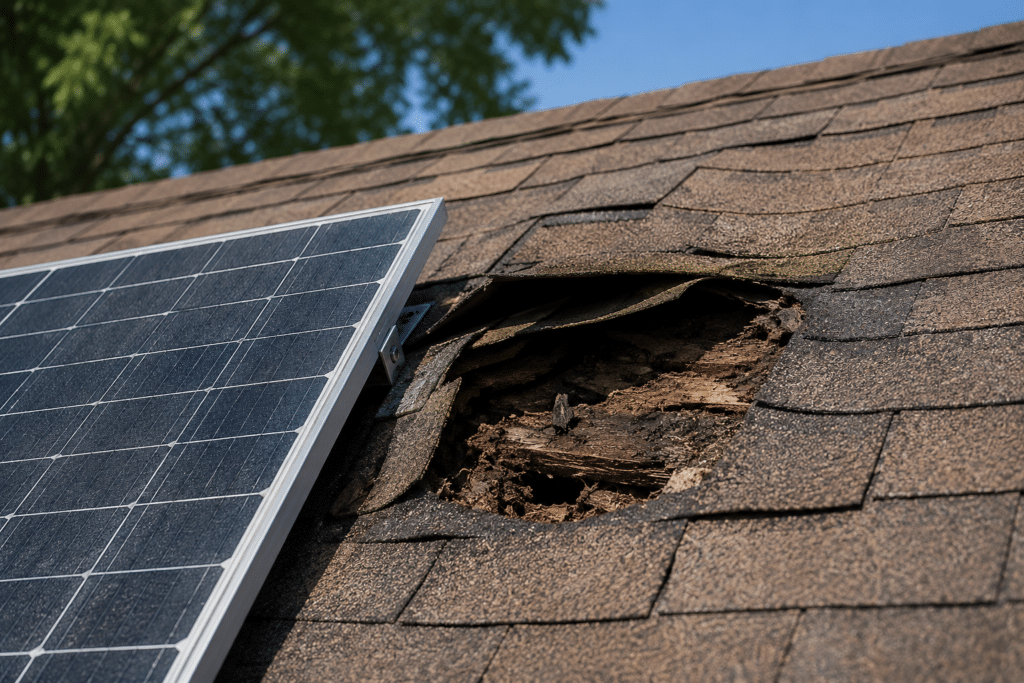
Can Solar Panels Hide Roof Problems?
As solar energy systems become more common throughout Southern California, many homebuyers and homeowners have a similar question: What does the roof look like underneath the solar panels?
It’s a reasonable concern. Solar panels can cover a significant portion of a roof, making some areas difficult to observe during a standard visual inspection. While solar panels themselves don’t automatically cause roof problems, their presence can sometimes make it harder to identify existing issues or evaluate the condition of certain roofing materials.
Understanding the relationship between the roof and the solar system can help homeowners make informed decisions and avoid unexpected surprises.
Solar Panels Don’t Usually Cause Roof Damage
One of the biggest misconceptions about solar energy systems is that they damage roofs.
When properly installed, solar systems are designed to work with the roof structure and roofing materials. Quality installations use flashing, mounting hardware, and weatherproofing methods intended to protect the roof from water intrusion and maintain its integrity.
Many solar systems perform for decades without causing roofing issues.
However, like any roof penetration, solar mounting points should be installed correctly and maintained over time.
Why Roof Condition Still Matters
Even when solar panels are functioning properly, the condition of the roof underneath remains important.
A solar system may have a lifespan of several decades, but roofing materials often age at a different rate. A roof nearing the end of its useful life may eventually require repairs or replacement, which can complicate future solar maintenance.
In some cases, solar panels may need to be temporarily removed before roofing work can be completed. This additional labor can increase the overall cost of a roof replacement project.
Understanding the condition of both systems allows homeowners to better plan for future maintenance.
What Issues Can Occur Around Solar Installations?
Most concerns associated with solar systems involve the areas where the system interacts with the roof.
Potential issues can include deteriorated flashing, aging sealants, loose mounting hardware, or signs of previous repairs. In some situations, water intrusion may develop around improperly installed mounting points.
These conditions are not necessarily common, but they can occur and should be evaluated when visible.
The good news is that many roofing and solar-related concerns can be addressed before they become significant problems.
Why Solar and Roof Inspections Work Together
A roof and solar system should not be viewed as separate components.
The roof supports the solar array, and the solar system relies on the roof’s continued performance. Evaluating both systems together provides a more complete understanding of the property’s condition.
For homebuyers, this can help reduce uncertainty before closing. For homeowners, it can provide valuable information about future maintenance needs and long-term planning.
Looking Beyond the Panels
Solar panels are often one of the most visible features of a home, but they are only part of the story.
Understanding the condition of the roof beneath the system is just as important as understanding the condition and performance of the solar equipment itself. While a visual review can provide some insight, the best way to fully evaluate a solar system is through a dedicated solar system inspection, which can assess system operation, identify potential issues, and provide a clearer picture of overall performance.
When both the roof and solar system are evaluated together, homeowners can move forward with greater confidence and a better understanding of one of their property’s most valuable investments. As solar adoption continues to grow throughout Southern California, taking a comprehensive approach to evaluating both systems is becoming an increasingly important part of responsible homeownership.